Q1 2026 Review Tax Memo
Automating Manual Reviews Delivers 50% Faster Time to Market
January 29, 2026
|
| Survey

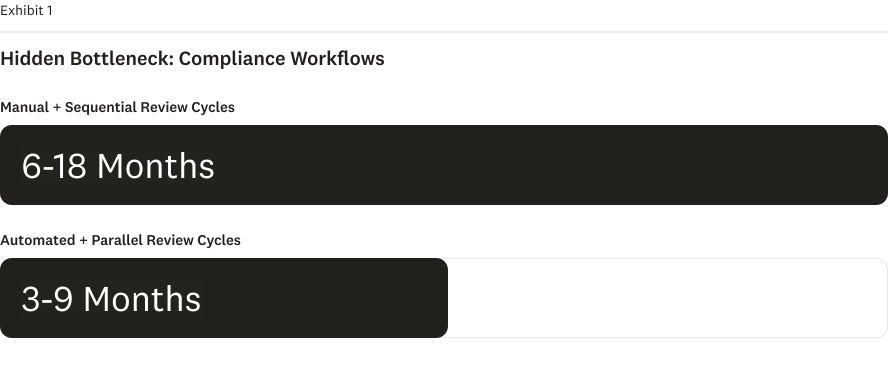
Almost all CPG executives surveyed say their organizations are investing in AI for efficiency gains, and many have launched automation pilots. But most remain stuck with 6-18 month approval cycles, unable to capture the speed and competitive advantages AI promises.

The Problem
CPG companies are losing competitive ground to a hidden bottleneck: manual compliance workflows that stretch approval cycles to 6-18 months, waste millions in expert time on routine verification, and delay market entry while faster competitors move first.
Why This Matters Now
A survey of 107 enterprise CPG compliance and marketing leaders shows where approval workflows are breaking down and costing companies millions in delayed launches.
Time-to-Market Impact: Review Capacity Is the Binding Constraint
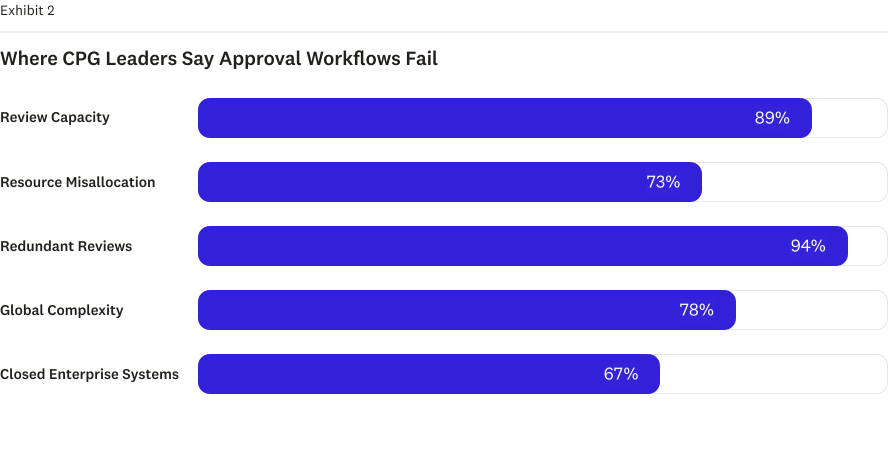
89% of regulated companies say review capacity, not technical or manufacturing limits, is what slows their speed to market. Even minor packaging or label changes add 4-8 weeks because of review backlogs and rework from human error. In an industry where seasonal launches and timing windows matter, approval queues determine market success more than product quality or marketing strategy.
Resource Misallocation: Entire Teams Doing Work That Could Be Automated
73% of companies dedicate entire offshore teams to manual verification that automated systems could handle. These teams spend days doing "blind double-checks" comparing digital files against physical packaging for each product line. Regulatory experts spend days manually searching ingredient restrictions across 40+ markets for each formula, lookups that could be instant with the right systems. The cost isn't just money: companies are using their most expensive compliance talent for routine tasks instead of strategic risk work.
There is an additional drain: project leaders become professional "follow-uppers." Project leads cite spending most of their time chasing approvals from different functions to keep projects on time.
The Redundancy Problem: Repeating Identical Checks That Could Be Automated
94% of legal and regulatory teams require full manual re-verification of elements that haven't changed.
"When a small change in an ingredient, a regulatory requirement, or a claim triggers the need to change an artwork, approval templates need to be re-opened.
For most organizations, these reopened templates need to be fully verified and approved again by regulatory and legal functions even if most of the elements remain unchanged, versus only focusing on reviewing what's been changed.
Organizations are currently paying teams to repeat identical checks that could be easily automated."

Gonzalo Balcazar, SVP at Reckitt
This pattern happens hundreds of times per year. A single address update on packaging triggers complete re-review of unchanged ingredients, claims, and regulatory language. Teams can't tell the difference between "what's new and needs expert judgment" versus "what's identical and could be pre-approved," so everything gets reviewed as if it were new.
Global Complexity: Multi-Day Cycles for Every Formula Change
78% of companies selling in multiple markets report multi-day regulatory review cycles for each formula change across 40+ jurisdictions. 81% maintain manually updated compliance databases that go out of date within weeks. The chicken-and-egg problem is everywhere: teams can't finalize formulations without knowing which markets work, but can't identify viable markets without finalized formulas. These delays add up across product portfolios, extending timelines by weeks.
Enterprise Integration: The "Closed System" Problem
67% of companies investing in enterprise infrastructure resist point solutions that don't show clear adaptability. Enterprise buyers consistently say compliance tools feel "closed," without visibility into technical architecture or proven ability to work with existing ERP systems, PIMs, and custom workflows. This integration barrier blocks procurement approval even when solutions show clear ROI in pilot testing.
"The 6-18 month approval cycles aren't because teams are slow. They're because decisions move sequentially.
Creative waits for Brand. Brand waits for Regulatory. Regulatory waits for R&D. Then one change triggers full re-review of everything, copy errors, brand guidelines, claim language, ingredient restrictions, regulatory compliance, and the cycle restarts.
What changes with AI isn't just speed. It's the ability to run all those checks in parallel across 40 markets. You're not asking people to take more risk. You're giving them better information to make the same decisions, just faster."

Ronnie Kwesi Coleman, CEO, Puntt AI
Actions Required
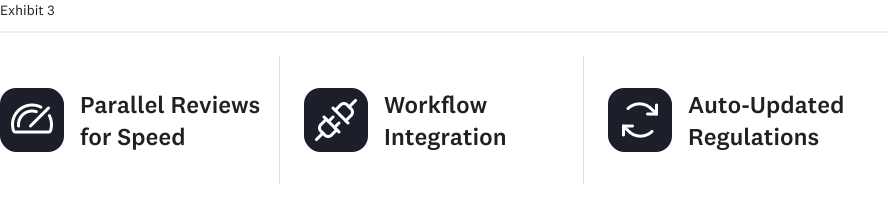
Enable Parallel Reviews for Exponential Speed Gains
Marketing/Compliance leads, 60 days
Deploy AI systems that review in parallel, not sequentially. This is the only way to achieve exponential speed improvements. Start with lower-risk digital marketing content to build organizational trust. Target 60-80% reduction in expert reviewer time by having AI flag potential issues before human review. Use detailed audit trails showing which regulations were checked and why determinations were made. This transparency builds legal team confidence. Expand to packaging after proven accuracy on digital content. Only AI agents can review multiple elements simultaneously, compressing weeks of sequential reviews into hours.
Ensure Enterprise Adoption Through Workflow Integration
Operations/IT leads, 90 days
Most large organizations have already invested millions in existing systems, whether older ERPs or newer workflow tools like Microsoft Copilot. The key isn't adding another standalone tool but integrating compliance intelligence into where work already happens. Lock approved packaging elements against modification so routine updates, address changes, minor text edits, bypass full compliance re-review. Automated systems verify that unchanged components remain compliant while routing only modified elements to expert reviewers. This eliminates 4-8 week delays for minor changes and ensures adoption by working within existing enterprise infrastructure rather than requiring workflow changes.
Stay Compliant Everywhere with Auto Updated Regulations
R&D/Regulatory leads, 90 days
Standardize expert knowledge into a living compliance database that updates automatically as regulations change, keeping compliance teams in control of risk. Automate the question "Can we use ingredient X at level Y in market Z?" across all jurisdictions. Convert multi-day manual research cycles into instant determinations. Technology, not just humans, handles the complexity of tracking changing rules and inconsistent interpretations across 40+ markets. This solves the formulation chicken-and-egg problem by enabling R&D to understand market viability in real-time.
Expected Outcome
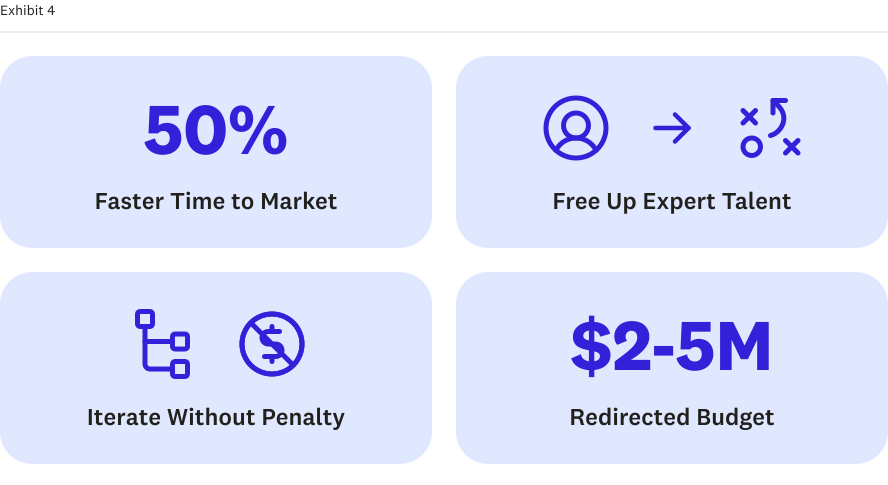
Speed: 50% faster time to market.
Packaging approvals compress from 6-18 months to 3-9 months, enabling companies to capture seasonal windows, respond to competitors, and launch innovations while market opportunities are still open.
Resource reallocation: Free up expert talent for strategic work.
Compliance experts shift from routine verification to strategic risk assessment and competitive intelligence, redirecting high-value talent toward high-value problems.
Market agility: Test and iterate without penalty.
Companies can test packaging variations, respond to competitive moves, and optimize for regional preferences when approval cycles shrink from quarters to weeks. Launch timing becomes determined by market readiness and product quality, not reviewer availability.
Financial impact: $2-5M per team per market redirected to growth.
The review tax, currently spent on verification overhead, flows toward innovation, market expansion, and competitive positioning instead.
If Nothing is Done
The competitive implications are clear: companies that solve approval speed will ship products while others remain stuck in review queues. Market windows for seasonal launches, competitive responses, and innovation opportunities will close during approval cycles. Millions will continue flowing to verification teams while expert talent stays stuck on routine tasks. First-mover advantage will go to companies that treat approval speed as a strategic capability, not an administrative necessity.
Decision Required
Approve 90-day POC with one approval workflow to prove ROI before expanding.
Approve 90-day POC with one approval workflow to prove ROI before expanding.
Recommendation: Start with lower-risk digital marketing content, then expand to packaging and formulations based on results.
Designate launch team by March 1 to begin Q2.
Sign up for email updates
Take back your launch date.
Book a Demo